


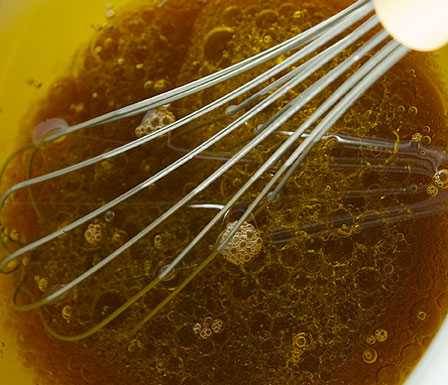
Oil and acid are the building blocks most salad dressings and marinades, especially oil and vinegar, a time honored blend called a vinaigrette. There are infinite variations on the theme. You can just use oil and vinegar alone, swap the types of vinegar, substitute lemon juice, add fresh herbs, dried herbs, spices, add honey or other sweeteners, and riff them any which way. The classic ratio is three parts oil to one part vinegar, but you might want less vinegar if you chose one that is especially high in acid, or increase it if you use a sweet vinegar like a tradizione balsamico.
But oil and water don’t get along, and vinegar is mostly water. Oil is hydrophobic (repulsed by water). Mix them together, shake as hard as you wish, and by the time the cruet gets from the head of a table of eight to the last person, they have separated. Worse, pour them on your salad, and they run off and settle to the bottom.
Oil and vinegar are like Spencer Tracy and Katherine Hepburn in most of their romantic comedies. They start out hating each other, but if something brings them together, a surfactant or an emulsifier, something that can break the repulsion, they cling to each other and the salad greens beautifully.
An emulsifier/surfactant coats the oil molecules and makes it easier for them to mix with the watery stuff. Mustard is a common emulsifier for home made salad dressings. Mayonnaise is also an emulsifier, as are egg yolks, and honey. Commercial dressings often use xanthan gum, lecithin, or dairy extracts.
Because there are infinite variations on the basic vinaigrette, I’m not going to give you a lot of different salad dressing recipes. I’m going to give you one that I use often. My wife, LT, came up it and we riff on it all the time. Experiment with the base formula to make your own. The finished products will keep in the fridge for months.