


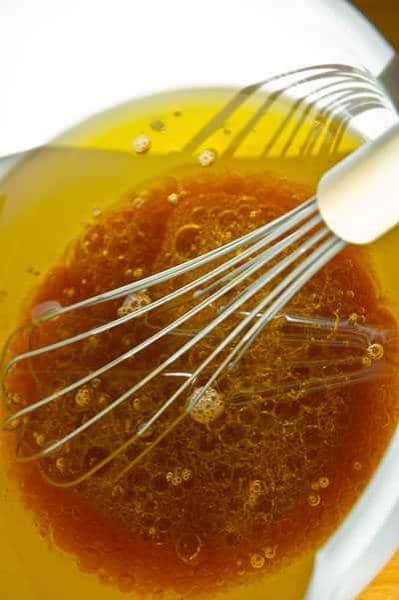
I’m a vinegar fan. She wields a painfully pleasurable whip. Some men collect Playboy magazines. I collect vinegars. There are typically a dozen or so in my pantry. I tell my wife they are all essential because most foods need acidity for brightness and to balance richness and sweetness. Sugar/acid balance is one of the core concepts of recipe development. That’s my story.
It’s a complicated process sometimes called double fermentation. First, yeast eat sugar, generate heat, belch up carbon dioxide, and pee alcohol. Second, if left exposed to air or inoculated with acetobacteria, it eats the alcohol and pees acetic acid, aka vinegar. Here’s the process: Ethanol (CH3CH2OH) the alcohol in wine, beer, and spirits, plus oxygen (O2) convert to acetic acid (CH3COOH) with water as a byproduct. In other words: CH3CH2OH + O2 → CH3COOH + H2O
Commercial vinegars typically range from 4 to 6% acidity and most give you an idea of their strength on the label in small print.
Any sweet juice can be the starting point of the process and the raw material contributes complex flavors. The right vinegar can be like a magic wand, bringing a recipe to life.
Some vinegars are not pasteurized so they can be cloudy or grow a skin of acetobacter on the surface. They are perfectly safe. In fact, you can use these as a starter for home made vinegar. For years I added leftover wine to a small wooden barrel with a “mother” of vinegar bacteria scavenged fro a French wine vinegar, and drew it off for marinades and dressings. After a while the romance disappeared as I realized that it was often possessed of acetone and other unpleasant contaminants. I now leave vinegar production to the pros. Besides, I rarely have leftover wine anymore.
Balsamic vinegar. A decade ago only professional chefs had heard about balsamic vinegar. Today the most mundane supermarkets stock several brands as well as a growing selection of balsamic vinegar salad dressings. You can buy it in bulk from some olive oil specialty stores, and every Italian restaurant worth it’s red sauce offers an item or three made with balsamic. Chefs and foodies consider balsamic as essential as extra virgin olive oil. I keep cheap balsamic on hand for marinades, salad dressings, and sauces, and the expensive stuff for drizzling like a syrup, especially on fresh tomatoes in Caprese salad. I also buy cheap balsamic and reduce it over a low heat to syrup for drizzling. I have even been known to drink the good stuff like wine or Cognac. Although they can be north of 6% acid, they don’t taste it because it is sweet and complex. Prices for a bottle range from $5 to $500. How can that be? What is the difference? Click here to read all about Balsamic Vinegar.
Cider vinegar. Cider vinegar and distilled vinegar are the two most common in the US. They are sold in large bottles. Cider vinegar made from apple juice, it is straw colored, and it is more flavorful than distilled vinegar. It is used in many barbecue sauces, pickles, and cole slaws. Usually you should not substitute if the recipe calls for distilled because the flavors may clash and because sometimes it is slightly sweetened. It is typically 5% acidity.
Distilled vinegar (aka white vinegar, spirit vinegar). It is not made BY distillation, it is made FROM distilled spirits. This is the first choice for pickling, some dressings, and many sauces. It is not vinegar that has been distilled, rather it is vinegar made from clear distilled spirits, like vodka. In the US the distillate is usually corn. It as clear as water and it has a neutral flavor and is best used to add acidity and brightness to dishes. I prefer it in most slaws because the others can be too strong and mask the vegetables. It is at the core of many barbecue sauces from the Carolinas. In East Carolina, many barbecue sauces are simply distilled vinegar, hot pepper, salt, and pepper. And in Western North Carolina it is pretty much the same with a little ketchup added. You can buy it in jugs, and it is also good for cleaning windows. Really. About 6-8%.
Flavored vinegars. Vinegar is a strong solvent, so put something in it and in short order it will extract flavor. Tarragon and other herbs are used, as are chile peppers, and even fruits and vegetables.
Malt vinegar. Made from malted barley, the first step in making whiskey or beer. Not well known in the US but it is very popular in England where the brown liquid is splashed on fish and chips, fish being fried filets and chips being French fries. I like it on fries, and you’ll often see it served with fries in Irish pubs, but next time you bake a potato, skip the butter and sour cream, and sprinkle it with malt vinegar and wake up to a surprise. About 5%.
Raspberry vinegar. There are three distinct types: Vinegar made from raspberry wine, raspberry juice added to vinegar, or raspberry flavored vinegar. You can even find raspberry flavored “balsamic” vinegar. All three have a bright fresh fruity aroma and flavor great for a lot of salad dressings. They are especially nice on spinach salad or dark bitter greens. About 5%.
Rice vinegar. Made from rice wine, they are usually pale straw colored and not as strong as other vinegars with a mild hint of sweetness. They are an excellent choice when your dish needs to be livened up without becoming too puckery. I use it a lot, not just in Asian dishes. Try it in your coleslaw. Seasoned rice vinegar is the same flavor as plain, it just has a bit of salt and sugar. About 4%.
Sherry vinegar. Made from Spanish sherry wine that has been aged in oak, it is brown, woody, rich, and complex, and it has become the darling of chefs. About 7%.
Wine vinegar. Made from inexpensive red or white wine, they have more flavor than plain clear vinegars. I keep red and white wine vinegars on hand for salad dressings. They have distinct rich flavors.
Others. I have heard of, but not tasted vinegars from, cane juice, dates, raisins, coconut, all manner of fruits, and with all manner of flavors. But I’ll get to them eventually.