


Pesto is one of the world’s great and most versatile sauces, and this tested recipe is sure to become your new favorite.
Pesto is a classic on pasta, but it also makes a superb flavoring when tossed with potatoes, spread on crostini, tossed with grilled shrimp, blended with butter for steaks, and so much more.
Probably invented in Genova, Italy, where fragrant fields of basil grow abundantly, the aromatic herb leaves were originally made into a paste with a mortar and pestle, hence the name. Today we use the food processor or blender. It is a classic on pasta, but it also makes a superb spread on toast for a fresh tomato sandwich, a scoop into any spaghetti sauce brings it to life and adds depth, and toss some in with potatoes and go straight to heaven (click here for the recipe for pesto potatoes).
As background for this how to recipe, read these articles, The Science of Herbs & Spices, The Science of Chiles, The Science of Garlic, and The Science of Salt.

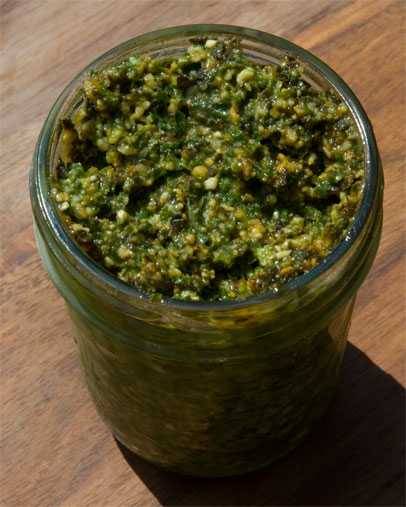
Classic Italian Pesto Recipe
Rate this RecipeIngredients

Method
- Prep. Remove the seeds from the olives. Coarsely chop the garlic first because blenders and food processors often don’t do a good job on them.
- Dump all the ingredients except the oil into a blender or food processor and let ‘er rip until everything is chopped fine, but not homogeneous.
- Slowly drizzle in the oil while the blades are on a low setting until, presto, pesto, you have a paste. The fragrance is heavenly. It can be kept in a tight jar in the fridge for a week before it starts to brown. If you need to keep it longer, top it with olive oil as a seal. Or freeze it. It freezes very well.