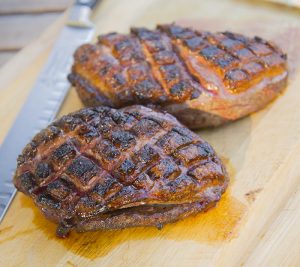


You can never go wrong with a perfectly grilled duck breasts but the real star of the show is the delicious sauce made of port, balsamic vinegar, and dried cherries.
Duck breasts are special, a unique cut and a delicacy prized by those in the know. They are red meat, totally unlike chicken, and they are rich and juicy. They are the best meat on the bird, better even than the legs. In fact, duck breasts are my favorite cut of meat from any bird. Period. They are a lot like beef or lamb, but there is one spectacular difference: They are covered on one side by thick layer of fat under the skin. The skin is so delectable that you shouldn’t waste it.
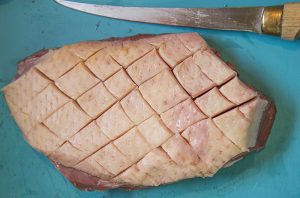
Long ago, chefs developed a technique for dealing with this subcutaneous fat layer. They gash the skin right down to the muscle and sear the breast in a frying pan so the fat will melt and run into the pan and the skin will stay on the meat, frying to golden crispness. Then they flip it, sear the back side, and serve the meat medium rare to medium, in the 135 to 140°F range. The problem is that this can make a real mess in the kitchen with spattering and smoke. So here’s how to do it outdoors where we don’t worry about smoke and spattering.
Up your game: Join our Pitmaster Club. Try it out for free for 30 days. No credit card is needed. No spam. Join now and Be Amazing!

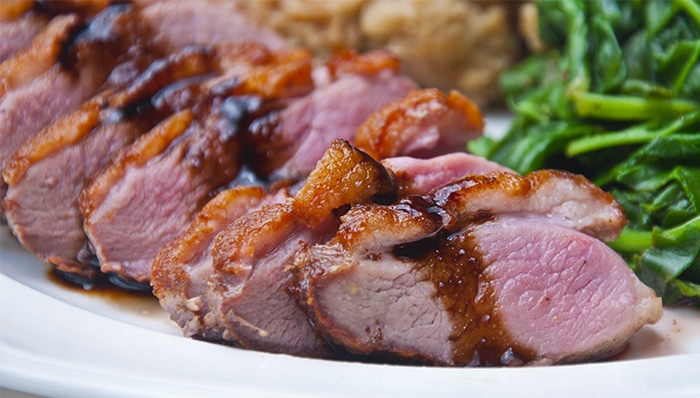
Grilled Duck Breasts In Cherry Port Sauce Recipe
Rate this RecipeIngredients

Method
- Prep. With the breasts skin-side up, gently draw the knife across the skin of each one, cutting through the skin and fat down to the muscle. Make parallel cuts every 3/4 to 1 inch (19 to 25 mm). Make similar perpendicular cuts so you have squares of skin still attached to the breast. The cuts will act as drains to allow the fat to run off during cooking. Salt and pepper both sides. Put the breasts in the fridge for about 3 hours so the salt can penetrate. Now peel and finely chop the shallots.
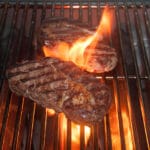
- Fire up. Set up your grill for 2-zone cooking. Put a heavy pan, a griddle, or a big skillet with ovenproof handles over the direct-heat side and close the lid (do not use nonstick pans over high heat; fumes from the coating can be hazardous). Preheat the pan for at least 10 minutes, until it’s ripping hot.
- Cook. Throw some wood chips or chunks on the flames to get some smoke rolling. Place the duck breasts in the hot pan, skin-side down. They will pop and sizzle and a lot of fat will render. When the breasts are dark brown, flip them over so some of the rendered fat will get on the meat side and sear for about 3 minutes to brown it. Move the meat to the grill grates on the indirect heat side.
- Make the Sauce. While the duck is slowly warming on the indirect side, pour off the burned duck fat and discard it. Wipe the pan with a paper towel, place it on the direct side, and melt 2 tablespoons of the butter in the pan over medium heat. I love duck fat, but don't be tempted to use the fat from the pan, it is likely burnt. Add the shallots and cook until limp. Add the stock, port, vinegar, and cherries. Cook over high heat until the volume has reduced by half. Move the pan to indirect heat and keep the sauce warm.
- Serve. When the interior temperature of the breasts is 135°F (57°C), about 30 minutes, take them off the heat and place on a cutting board. Add the remaining 2 tablespoons butter to the sauce and whisk it in. This is called mounting with butter, a classic French technique that thickens and enriches the sauce at the last minute. Cut the breasts at an angle across the grain, making slices just a little more than 1/8 inch thick, and keep the slices bunched in order. Spoon some sauce onto each of two plates, fan the slices out on top of the sauce, and drizzle a little more on top of the meat.