

Alcohol normally messes up the proteins in meat, but if done right it’ll turn simple grilled steaks into something extraordinary.
This may be the first recipe I ever created. I was an undergrad at the University of Florida in the 1970s. On a limited budget I often bought cheap chuck steaks and marinated them overnight in cheap red wine which was plentiful because I worked at ABC Liquors on Newberry Road in Gainesville.
Here are some of the cuts of chuck in order of quality
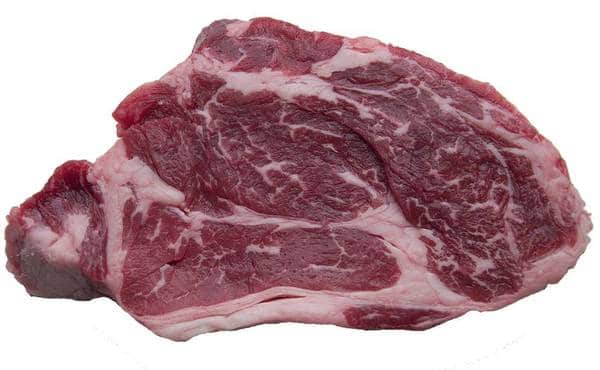
Just in front of the rib primal, the best and most expensive section of steer, is the chuck primal, which includes the shoulder meat. It is also less expensive. Chuck steaks can be a little tough because these muscles work harder than the meat a little further back, and they have more hunks of fat and gristle, but they can also have great flavor. When you shop for chuck, look for cuts that are at least 1″ thick, and try to find those that have a big round hunk of meat in the center like the one in the picture. That will be the piece that is the same muscle as the ribeye and strip steak, the longissimus dorsi. At half the price. You can even ask you butcher to cut you steaks from the back of the shoulder. Ask for chuck eye steak like the one in the picture. Another good chuck for cooking with this method is the flat iron, but it has become popular lately so it might be more pricey. By the way, I have done this with flanks steak and it works just fine.
Chuck eye steak. This is the steak just in front of the rib section and contains meat very much like ribeye. It is the best part of the chuck primal, can taste a lot like a ribeye, but it is a lot less expensive.
Top blade steak or Flat iron steak. Nicely marbled for flavor and not too tough.
Shoulder center cut or Ranch steak. Not as well-marbled and a bit tougher, so it is usually cut thinner.
Petite tender. Flavorful, but it can be tough
Shoulder steak. Best cut into cubes for spiedies.
Chuck steak. Can be gristly. Best for pot roast.
For a more complete list of the different steaks and roasts from the chuck primal, see my article on beef cuts.

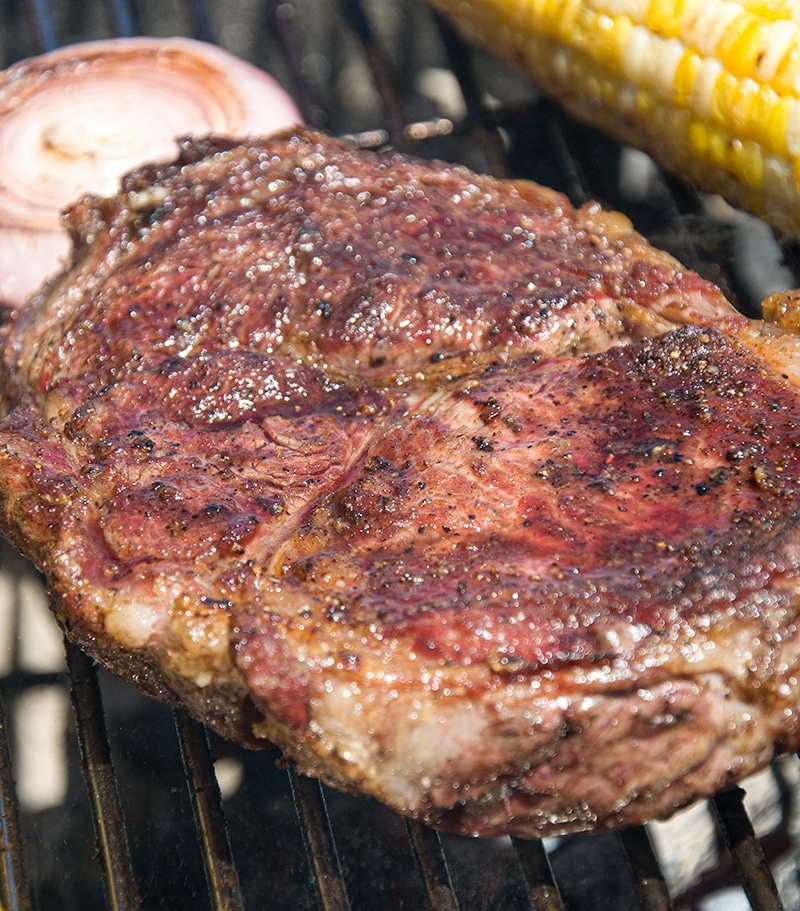
Red Wine Marinated Grilled Chuck Steak Recipe
Rate this RecipeIngredients

Method
- Prep. Combine all the ingredients except the steaks in a large pot and whisk them together.
- Cook. Boil hard for about 5 minutes to reduce by about 1/3. This will get rid of most of the alcohol, extract flavor from the herbs and spices, and concentrate the wine a bit. Alcohol, contrary to popular belief, is not great in marinades because it can dry out the meat. Cool to room temp.
- Prep again. Trim excess fat from the exterior of the steaks. With a sharp knife, score the surface of the steak about 1/8" (3.2 mm) deep by dragging the knife across it. Make these slits about 3/4" (19 mm) apart on both sides. This technique, called gashing (read about it here), will help the marinade penetrate and will hold the flavor when it is cooking. Don't worry, juices won't escape. Put the steaks in a individual zipper bags, add the marinade, and zip. You can put them all in one bag, bowl, or pan, but you want the marinade in contact with all surfaces, so you will need to flip them regularly. Put the bags in a bowl or pan to catch any leaks, and marinate in the fridge at least 2 hours and up to 12 hours, turning them occasionally to help the liquid contact all surfaces.
- Fire up. Preheat the grill for 2-zone cooking to about 325°F (163°C).
- Cook. Take the steaks out of the marinade, drain off most of the liquid but do not pat dry. Normally we pat meat dry to make sure it crisps. But when using a flavorful marinade, don't pat it dry because most of the flavor is captured in the microscopic cracks on the surface and the slits we made. Grill over the hot section of the grill until rare to medium rare or your favorite temperature. They'll take longer than normal because the surfaces are wet, perhaps 20 minutes for a 1" (25 mm) steak. As always, a good digital thermometer is essential for getting things perfectly done. The reason I call for a 2-zone setup is so that you have a safe zone if one steak cooks faster than the others and in case the hot side is too hot and the surface starts to blacken. It is ALWAYS helpful to have a safe zone.
- Serve. To make the meat a bit more tender, serve it sliced. Be sure to cut across the grain into 1/4" (6.3 mm) slices. Plate and serve immediately.