


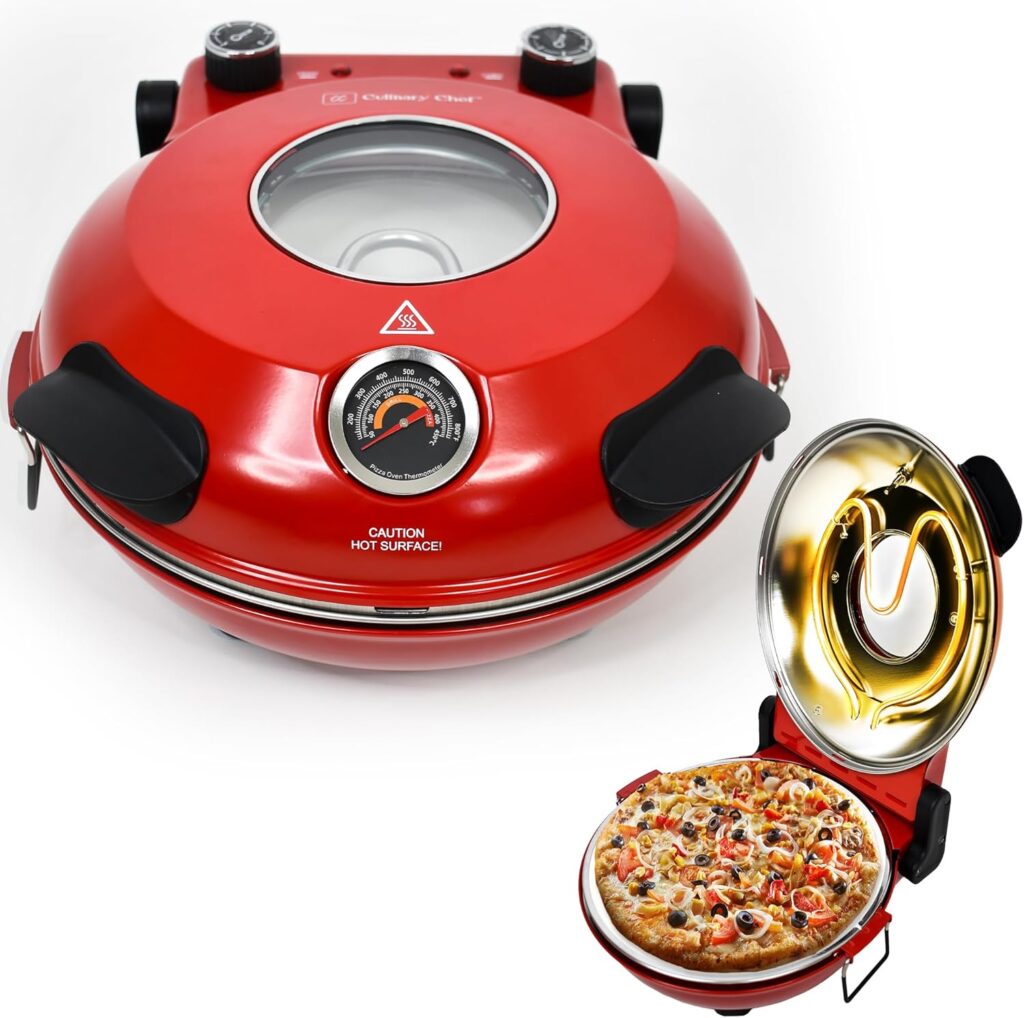
A low-price, compact, fast-heating one-trick pony that makes a decent pizza
I’m a bit of a pizza nerd. I ghostwrote the cookbook We The Pizza, co-wrote Mastering Pizza (more than 100,000 copies sold!), and have been testing and reviewing pizza ovens for AmazingRibs.com since 2019. When Meathead sent me a link to the Culinary Chef Pizza Maker, he included a note that said “only $99!”
I scoffed. This little contraption couldn’t possibly measure up to a real pizza oven that costs at least 5 times as much, could it?
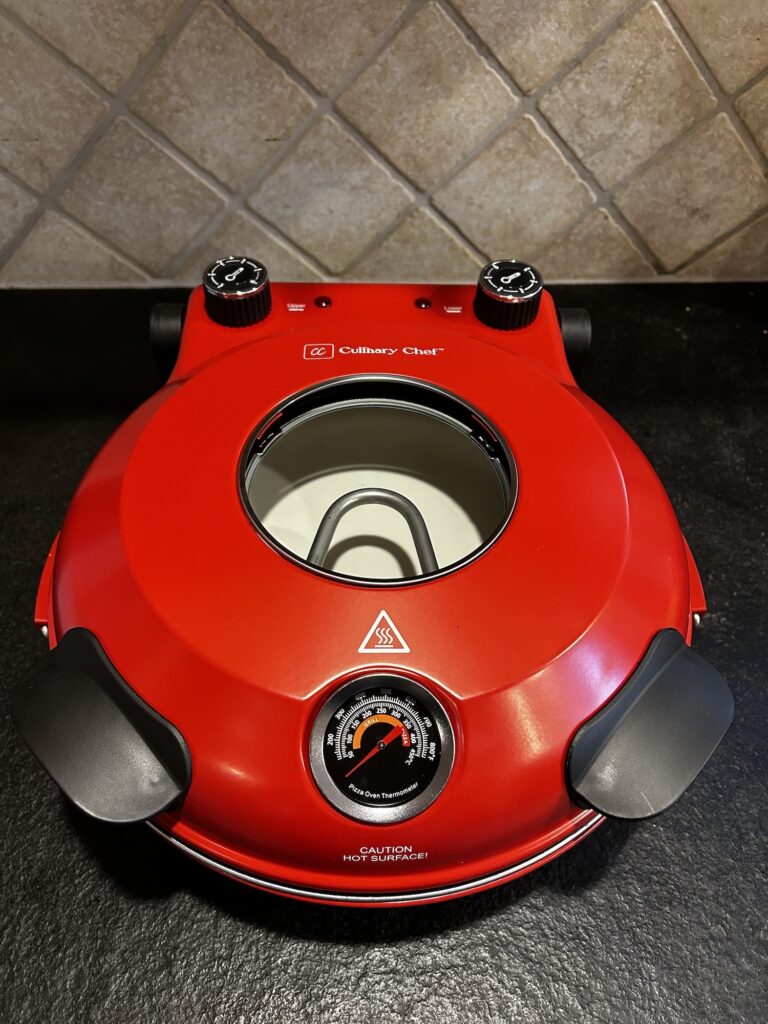
Well, I was pleasantly surprised. No, it’s not going to rival the results you get from a real wood-burning oven or super-hot pizza oven like the Gozney Dome. And it’s not nearly as versatile as other pizza ovens. But for $99, I have to admit, it’s not bad.

Construction
Our full-time equipment tester, Max Good, tracked down the Culinary Chef branded device to Curtis International Ltd. in Mississauga, Ontario, Canada. Max surmises this unit is likely coming from an OEM in China and branded for several manufacturers. (You can find identical units on Amazon, such as Piezano, Baker’s Friend, and Eatex.) Incidentally, on the Curtis website, the Culinary Chef Pizza Maker sells for $200, but it’s on Amazon for $99, often on sale for $79. Shop smart.
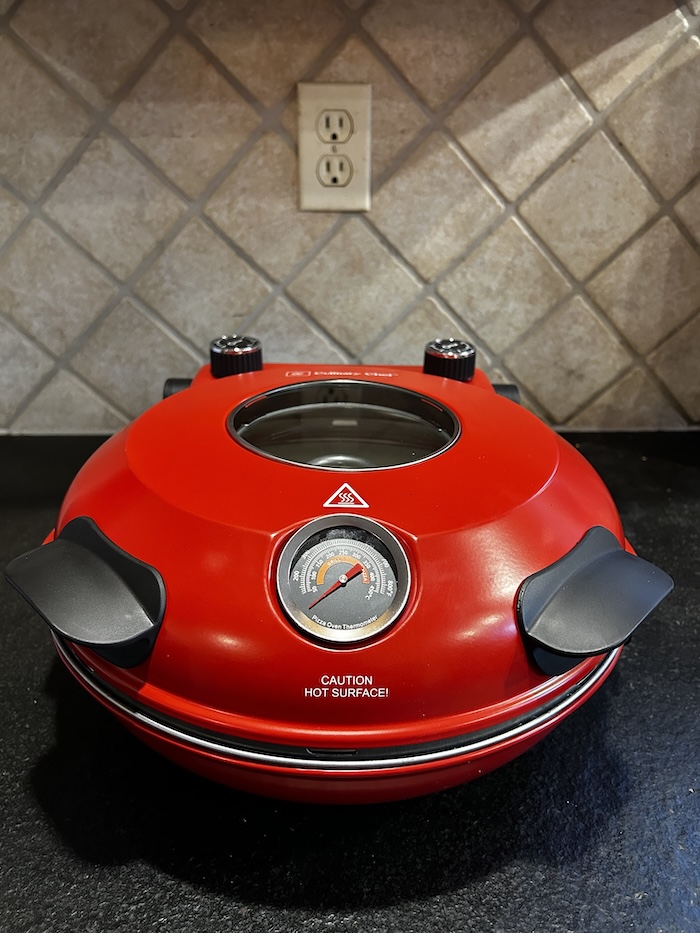
The pizza maker looks sort of like a small flying saucer. Really small. The exterior dimensions: 13-inch diameter and 7-inch height with 11-pound total weight.
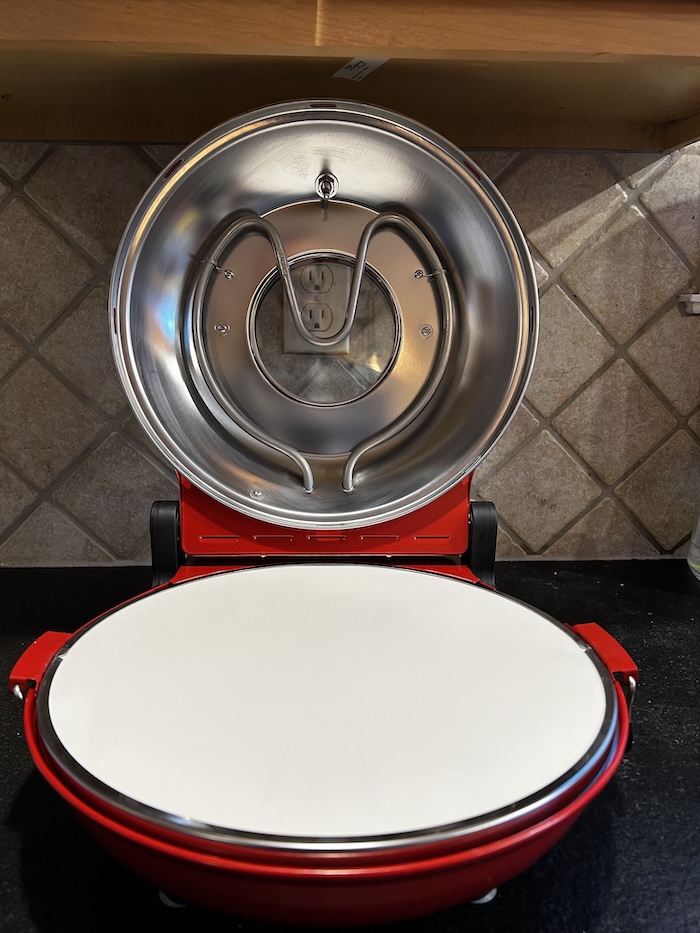
It has a simple clamshell design with heat-resistant handles on the lid and two electric heating elements. One on top, which you can see through the viewing window.
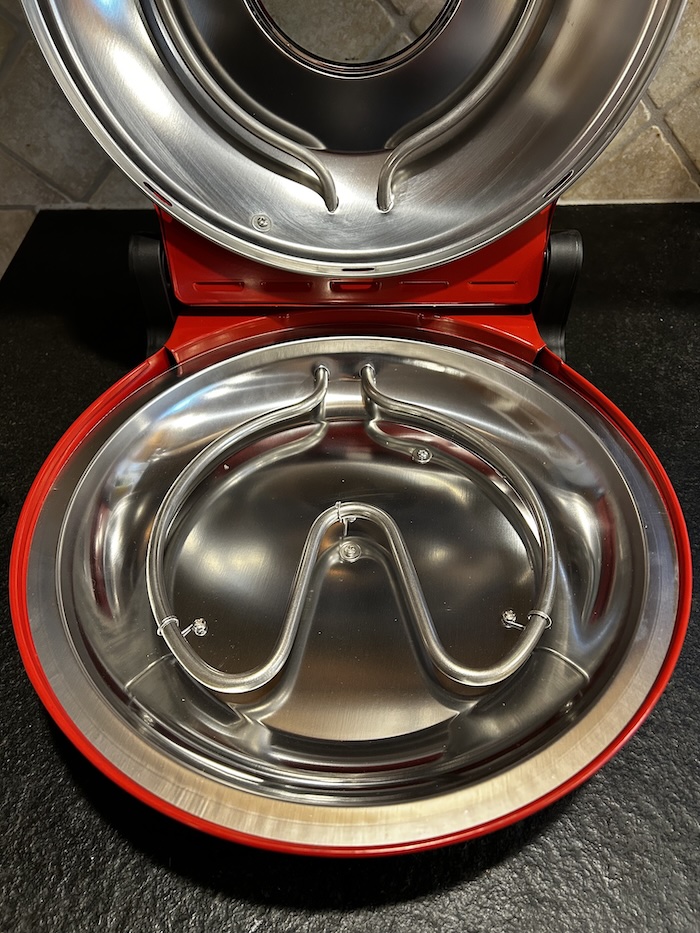
One on the bottom which you can see when you lift up the 3/8”-thick ceramic pizza stone.
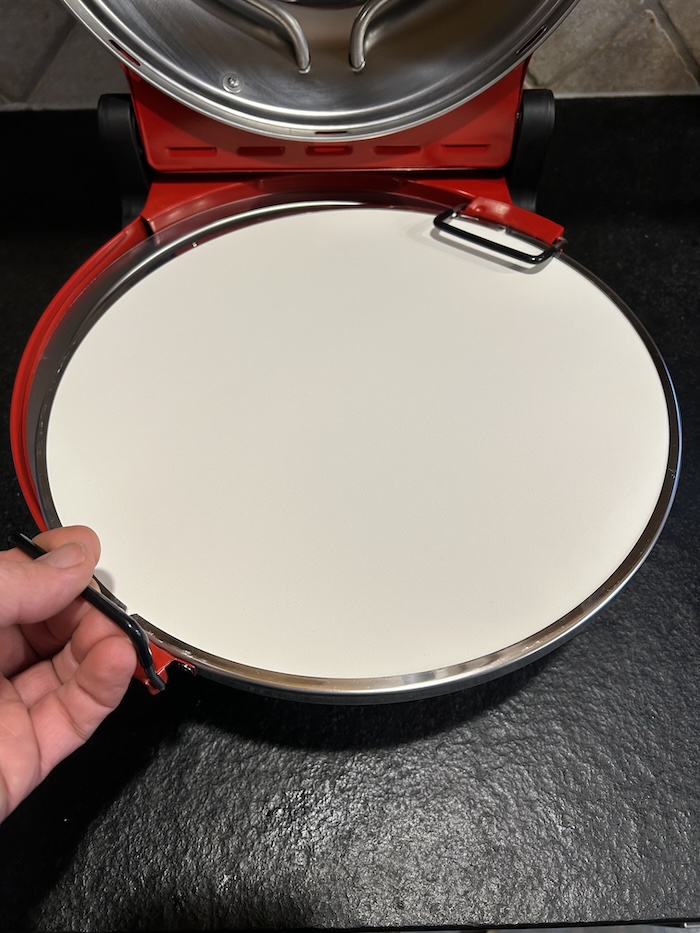
The stone comes in a metal rimmed housing with handles so you can easily remove or replace it.
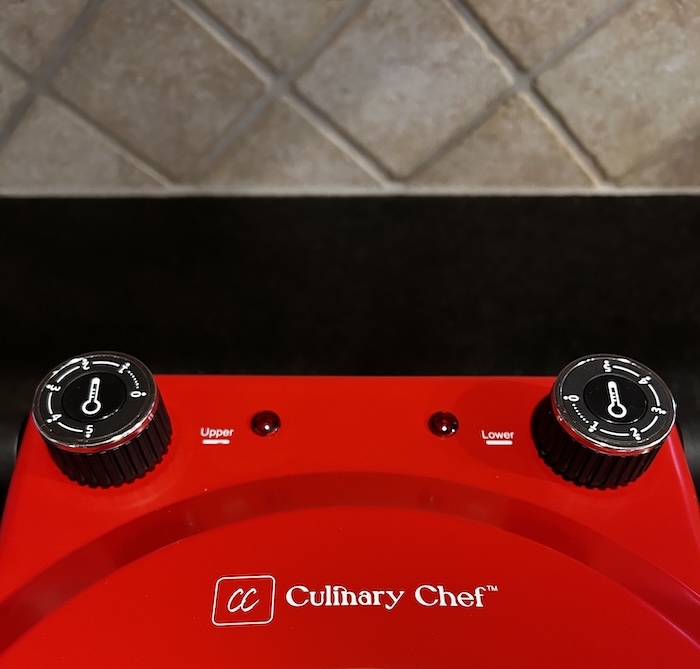
The unit has two temp control knobs for the top and bottom, draws 1200W (700W for the top and 500W for the bottom heating element), and plugs into a standard household electrical outlet.
The temp knobs have hash marks for settings 1 through 5, which correspond to these temperatures listed in the instruction manual:
Setting 1: 356°-410°F
Setting 2: 500°-536°F
Setting 3: 572°-608°F
Setting 4: 662°-698°F
Setting 5: 734°-800°F
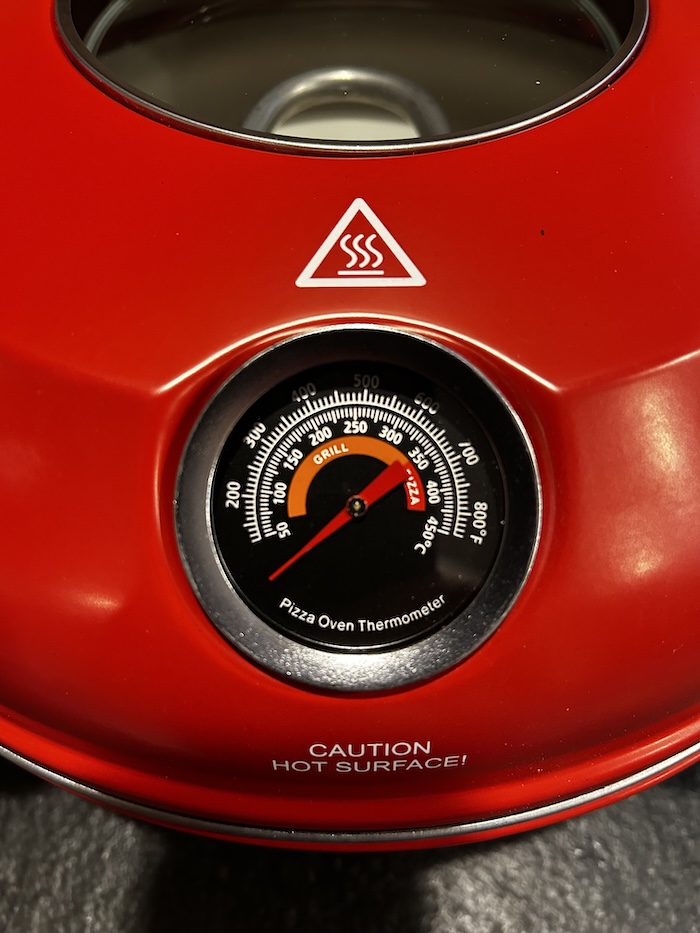
Those are very specific temps for a non-digital, dial-style temperature knob. I’m not sure how the R&D team clocked those reference temps, but they did think to add this note: “the internal temperature of the pizza machine will different [sic] depending on the ambient temperature.” I’m adding another note: the round “heat indicator” embedded in the lid is not to be trusted. Give me digital thermometers or give me death.
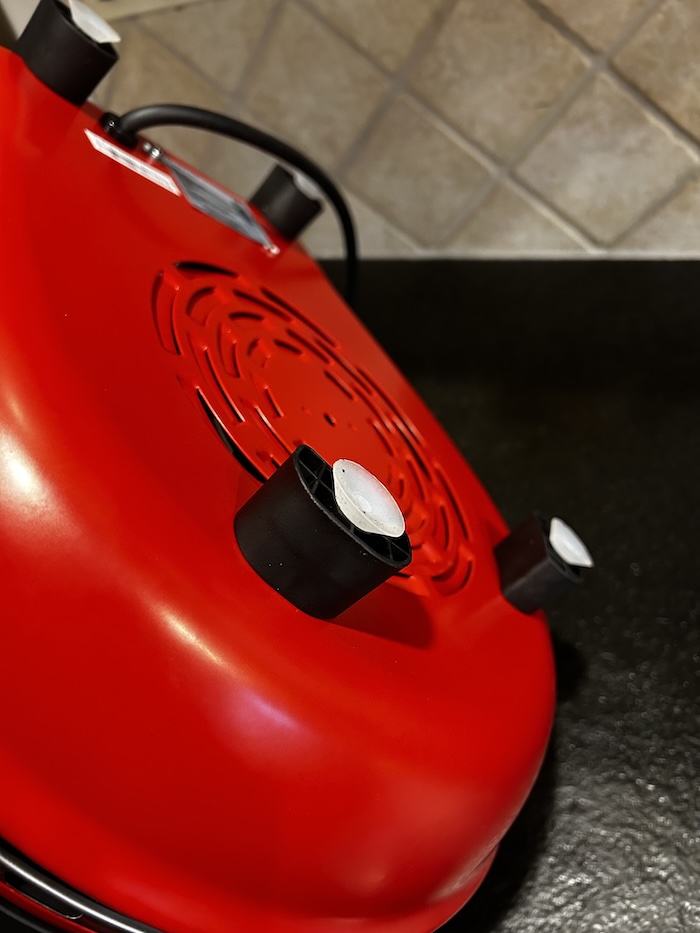
The Culinary Chef Pizza Oven is designed to be used indoors. Its four feet sit on 1” suction cups to help hold it in place on your countertop.
Cook Tests
Let’s see how this baby cooks. The manual says “ENJOY YOUE [SIC] NEW CULINARY CHEF PIZZA MAKER”. Was the manual translated from Chinese? Probably.
For Neapolitan style pizza, you want both knobs on this unit set to Warp Speed, or setting 5, for the max temp of 800°F. When you turn the knobs, an indicator light turns on for each. When the set temp is reached, the indicator light turns off.
Heat-up time
I cranked both knobs to max heat, waited 10 minutes, then checked the temps: the unit’s built-in heat indicator read 675°F and the stone temp measured 545°F on my IR gun, more than 125°F less. The stone temp is really what you want to measure. Click here to read our infrared thermometer reviews. After 14 minutes, the light for the bottom heating element went off, indicating the set temp of 800°F was reached. At that point, the stone temp measured 664°F on my IR thermometer. After 15 minutes, both indicator lights were off and the built-in dial-style thermometer read 800°F. I figured I’d give it a bit longer to let the pizza stone get fully saturated with heat. After a full 20 minutes of preheating, the stone temp was at 676°F, plenty hot for a decent Neapolitan-style pizza. Warning: the metal clamshell does get hot to the touch, so take care to use the heat-resistant handles.
First pizza
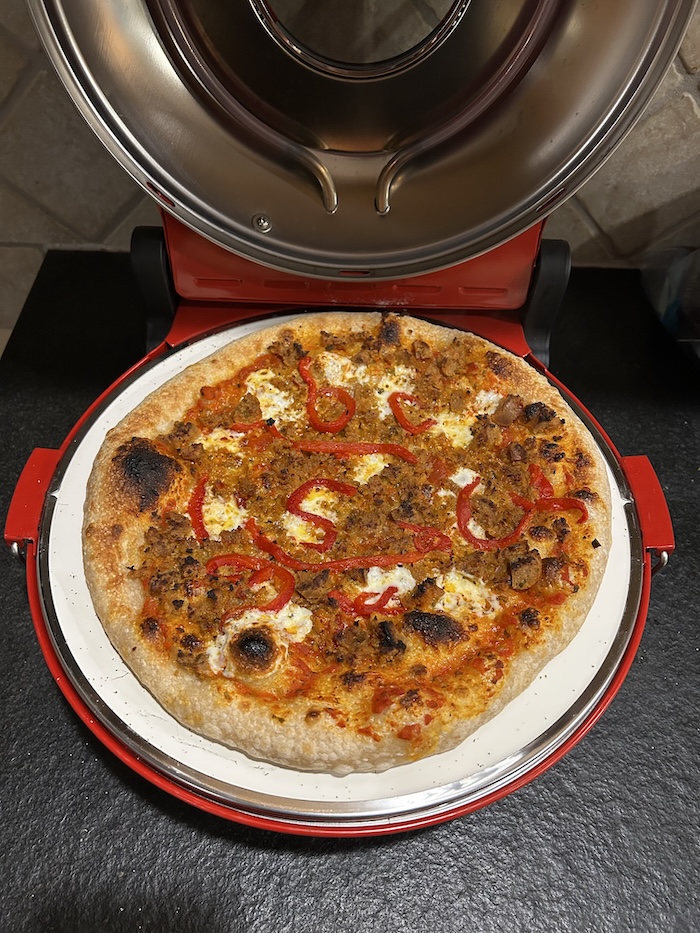
I launched a sausage pepper pizza and rotated it after 2 minutes as the manual recommended. It was done after a total of 6 minutes. The top was blistered with some brownish black bubbles, but the outer perimeter of the crust was slightly underdone. The pizza would have burnt if I let it go longer.
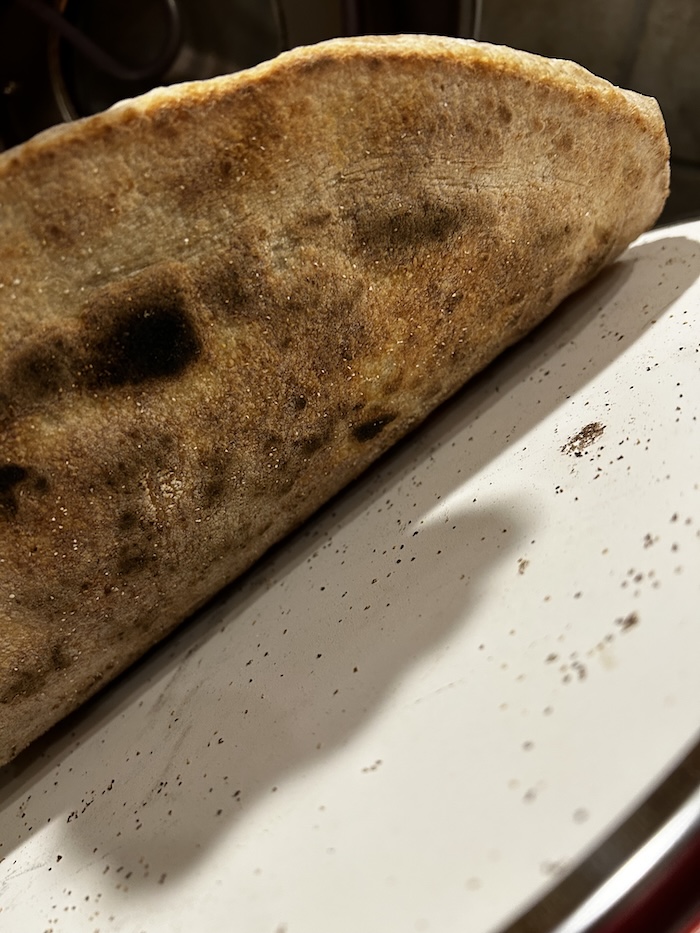
Fortunately, the undercarriage was nicely browned and crispy.
Pizza size
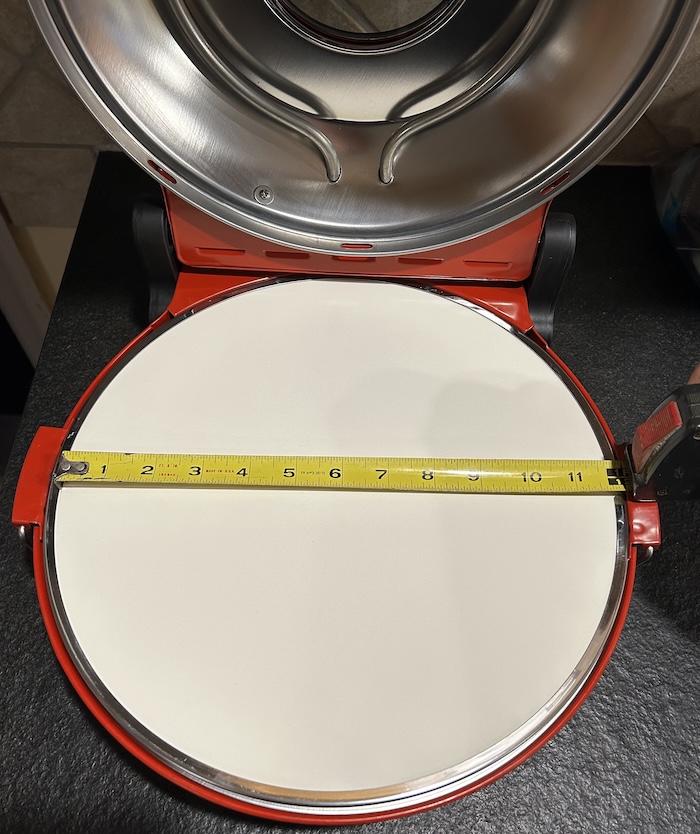
The marketing language advertises that you can bake 12-inch pizzas in Culinary Chef, but the instruction booklet recommends a 10 to 11-inch pizza. The stone diameter actually stops at 11.75” where the metal housing assembly begins. When shaping your dough, pay attention to the diameter, or your pizza may not fit this oven. It’s not a big deal, but don’t shape a 12-inch dough round thinking it’ll work on this unit. It won’t. With launching and turning, a 10- to 11-inch pizza is best. The manual recommends using 240-gram dough balls stretched to 10-11 inches, baked at 800°F for 5 to 6 minutes. My dough balls were 260-gram, so the crusts were a little thicker than I like for this hybrid Neapolitan/NY style.
Heat recovery
Immediately after removing my first pie, I clocked the stone temp at 475°F. After 3 minutes recovery time, it climbed back up to 620°F.
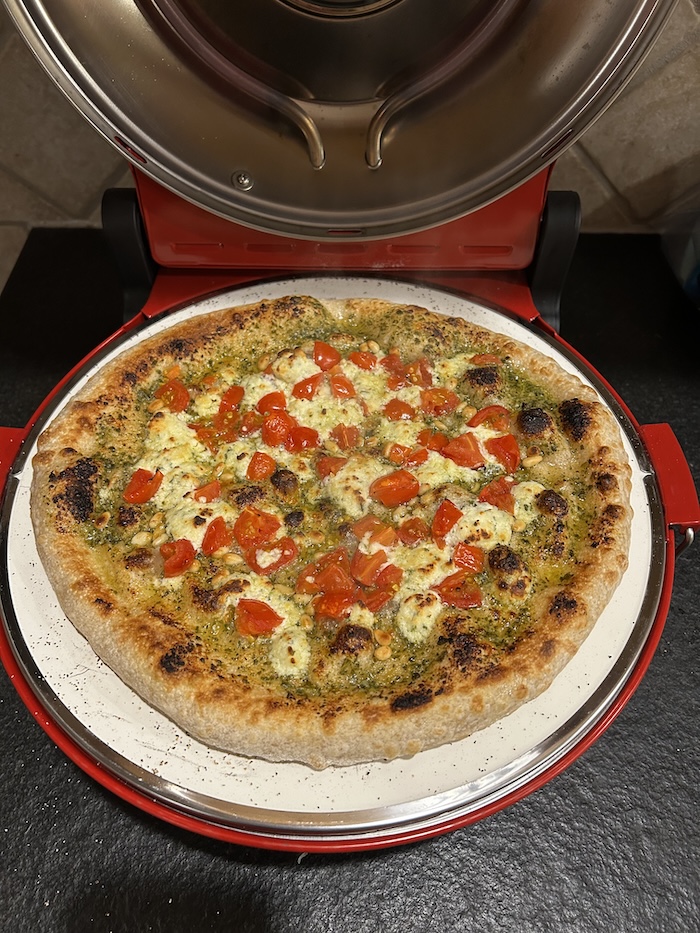
My next pizza, a Pesto Gorgonzola Tomato combo, also took 6 minutes cooking time. I removed the pie, waited 4 minutes, and the stone had recovered to 575°F, about 50° less than the first recovery period of 3 minutes.
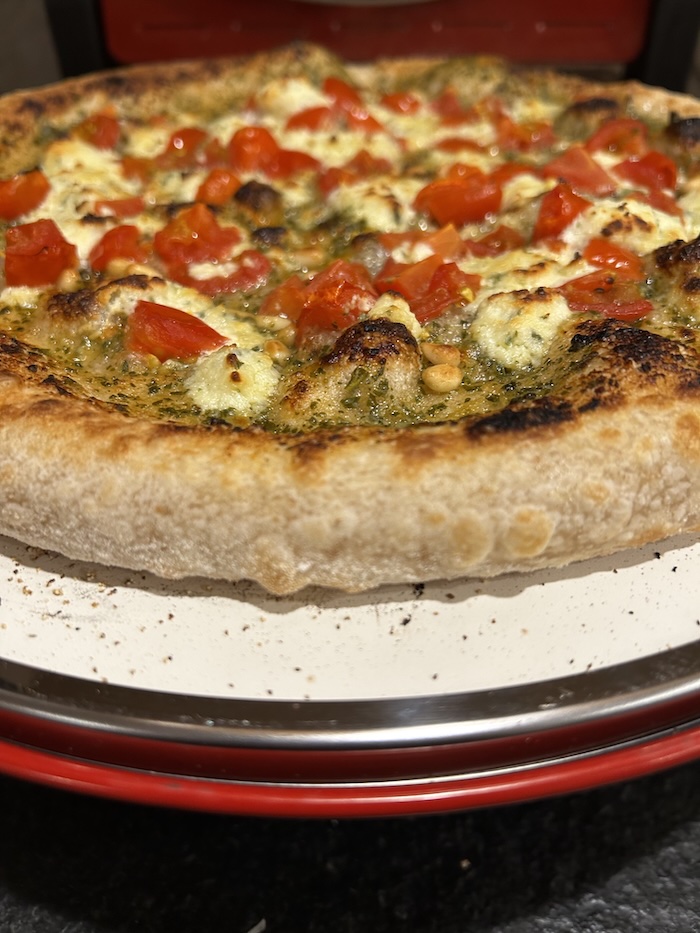
The top and bottom of the crust were nicely blistered but the outer perimeter, again was underdone.
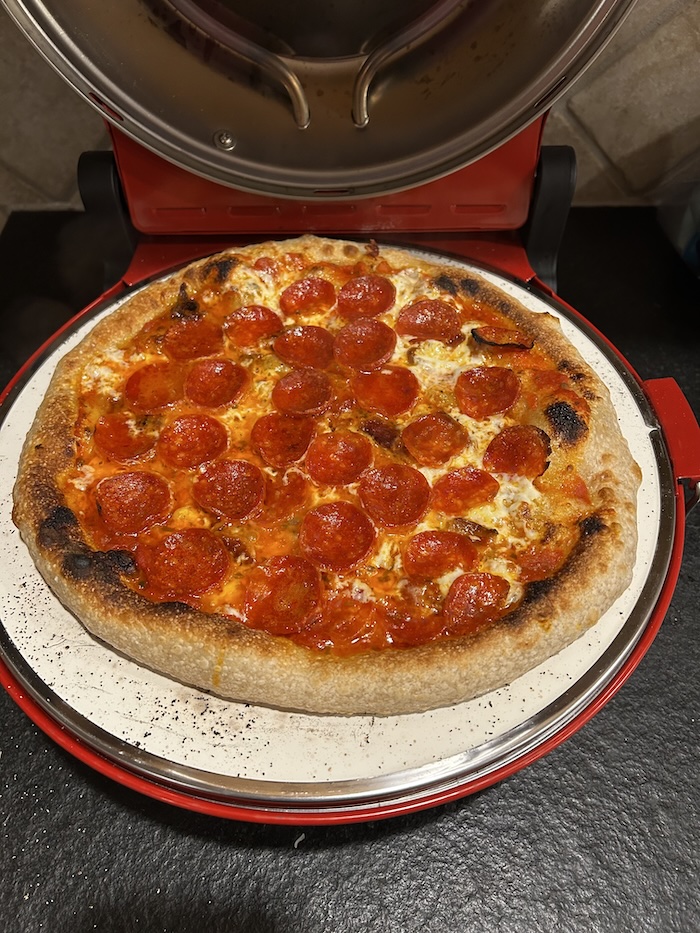
A basic pepperoni was the last pizza I made in this cook session. It turned out pretty good. But judging by the stone temperature, if you plan to make several pizzas in succession in Culinary Chef, you may need to increase the heat recovery time between pies as you go.
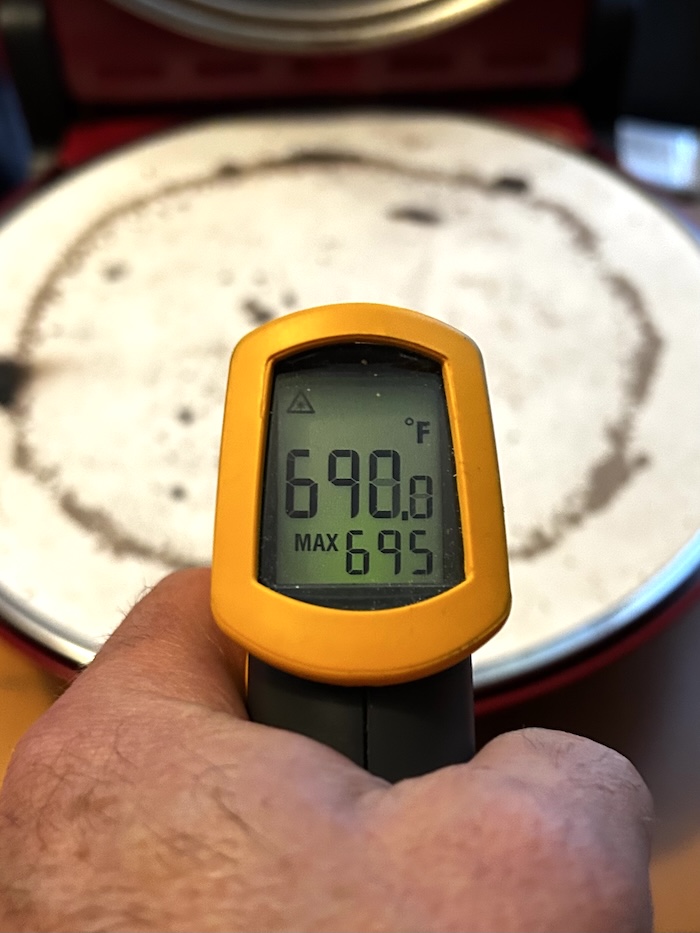
Max stone temp
Incidentally, the max I got the pizza stone on my IR gun was 695°F, which is plenty hot for most pizzas. That was after 20 minutes of preheating for another round of cooking tests, which pretty much mirrored the first. For cooking multiple pizzas, keep in mind you’ll need at least 5 minutes heat recovery time between them.
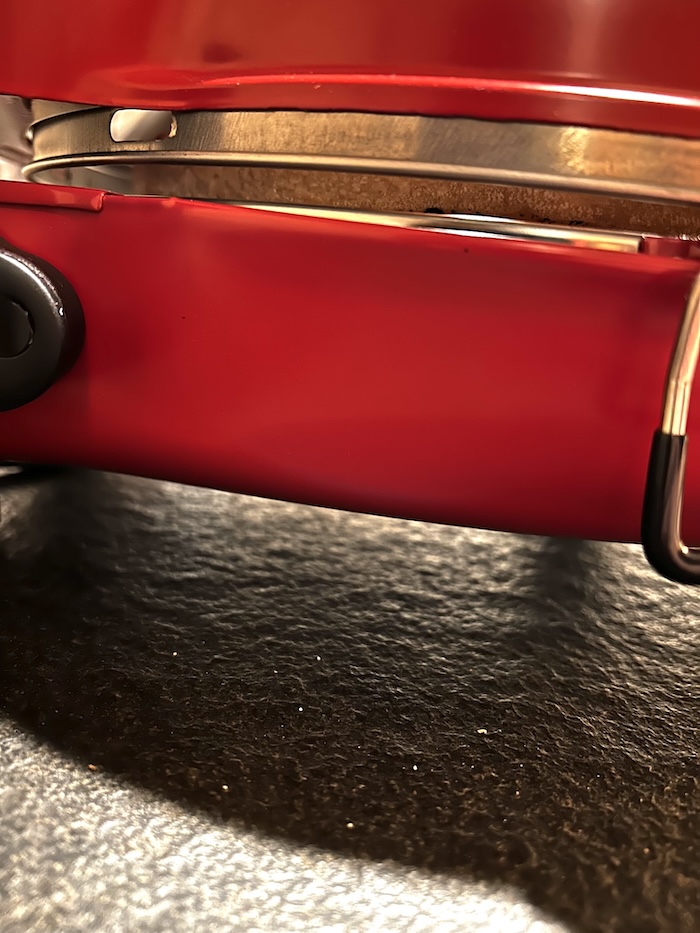
Uneven heating
All of my test pizzas were browned top and bottom, but the outer perimeter of the crusts were pale and underdone. To figure out why, I looked at the unit from the side: there is a 1/4-inch gap between the lid and the base. An ill-fitting clamshell allows heat to escape around the crust perimeter. Not ideal.
Frozen pizza
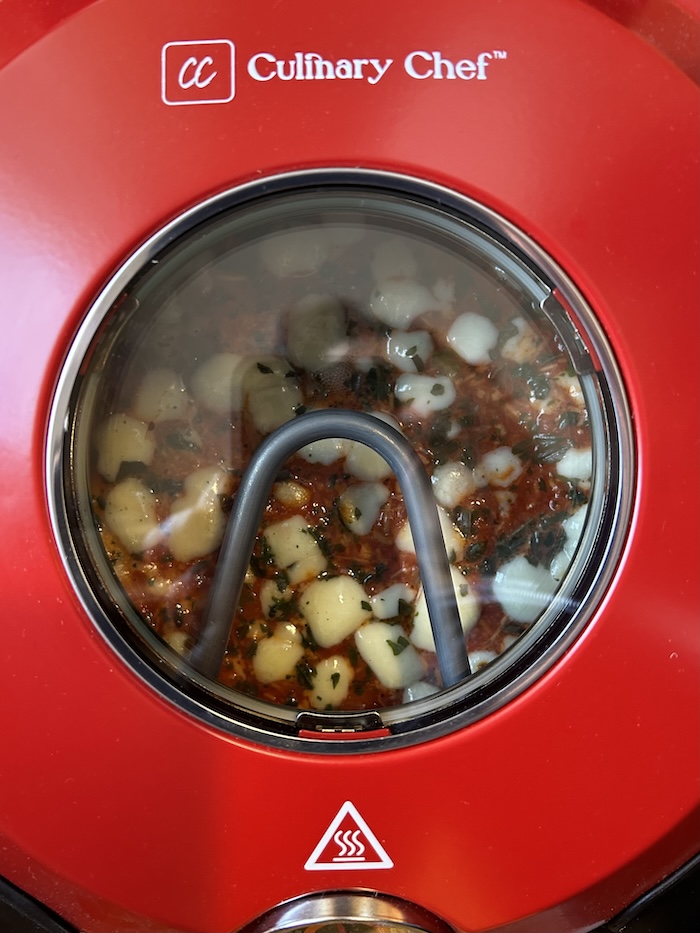
A few days later, I tested an Amy’s Margherita Pizza and set the oven temp to 450°F (setting 2) to match the oven temp recommended on the package, per the manual’s instructions. The manual also said to cook frozen pizza for 15 to 20 minutes, but the Amy’s package gave a 9-10 minute cook time “or until the crust starts to brown.” At setting 2, within 10 minutes, the stone had reached 450°F on my IR gun. I launched the pizza and started checking through the view window at 10 minutes.
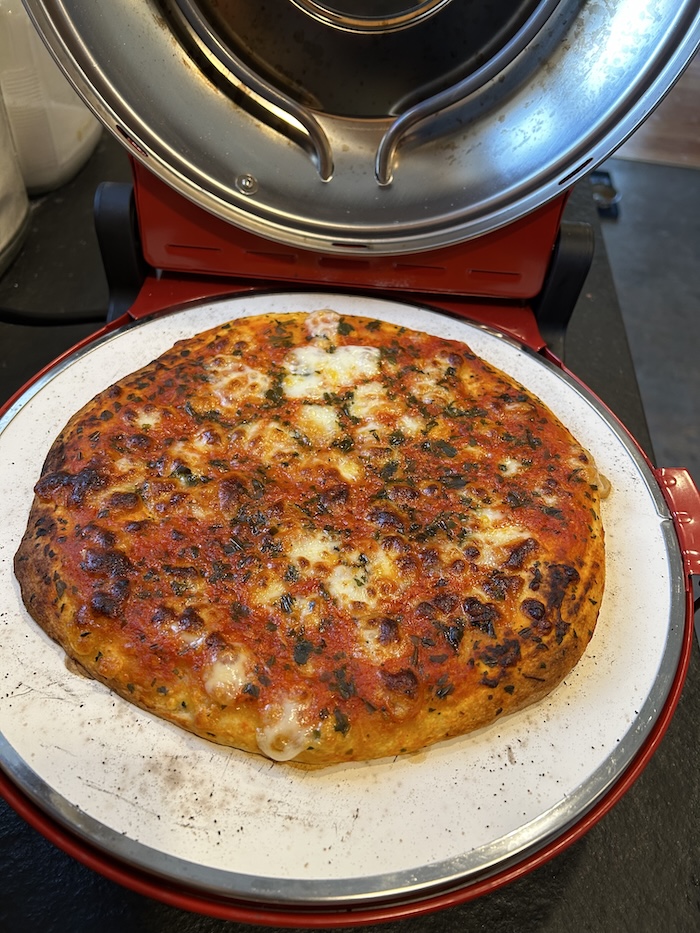
Total cook time ended up being 13 minutes, at which point the toppings were starting to overcook.
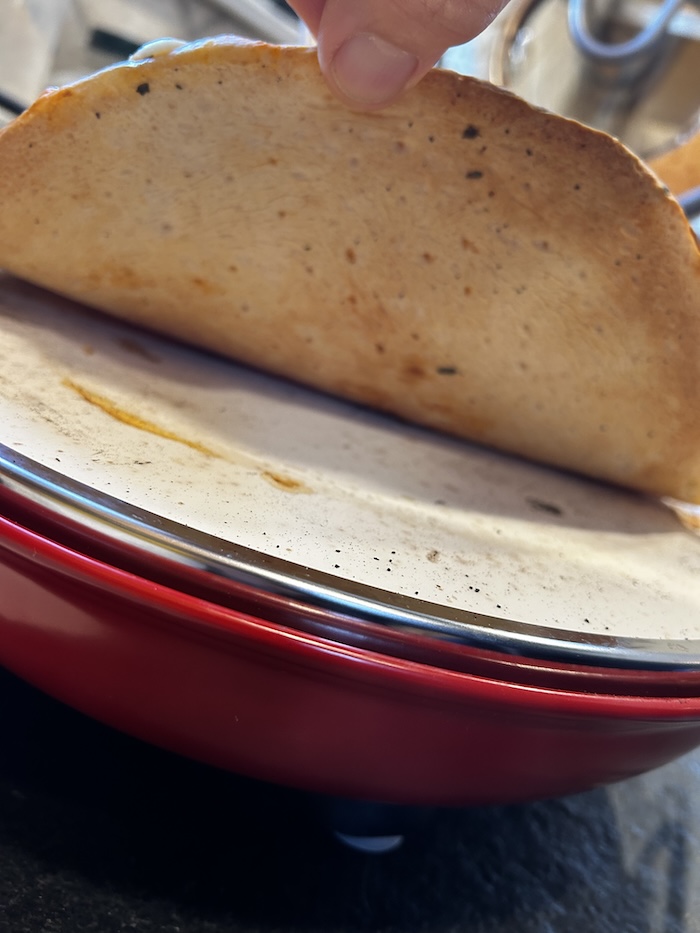
The bottom was still a bit pale, so I probably should’ve dialed up the bottom heating element to setting 3 or 4. The pizza tasted fine though. Just not super crispy on the bottom.
And that’s about all the pizza you can cook in the Culinary Chef Pizza Maker. It’s too small to fit a pan pizza. Too shallow for a calzone. Your choices are an 11-inch pizza with fresh dough or a premade “Boboli” style dough, or a frozen pizza.
Conclusion
This little unit makes a decent personal-size pizza. The outside perimeter of the crust comes out slightly underdone compared to the top and bottom due to a gap in the clamshell. Otherwise, it’s not bad for under a hundred bucks. If I were in an apartment on a tight budget or in an RV with tight space and absolutely had to have a pizza oven, I’d consider it. It’s also easily portable to a vacation rental.
Pros
- Super-compact
- Portable
- Fast-heating
- Cheap
Cons
- Limited to 11-inch pizza
- No pan pizza
- Uneven heating due to gap in clamshell
Quibble from a word nerd
- What’s a Culinary Chef? Is there any other kind of chef?
Warranty
1 year from delivery date for defects in material and workmanship, excluding glass, normal wear and tear, and misuse.