

Just because they aren’t the most expensive cut of beef at the butcher counter doesn’t mean flank steaks can’t shine just as bright as the rest.
My two favorite steaks: Expensive ribeyes and inexpensive flank steaks. Because I’m a cheap SOB, I cook flank steak a lot more than I cook ribeye.
Ribeyes are expensive because they are very tender. And because they are usually marbled with thin threads of fat which adds to the texture and flavor.
Flank steaks, sometimes called London Broil steaks, are cheaper because they have very little fat. Plus they can be chewy if you overcook them or cut them improperly. I should point out that flank steaks used to be even cheaper than they are today, but more and more folks are discovering how good they are if they are cooked properly.
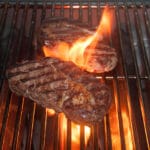
Because they are thin, we’re going to grill this baby hot and fast over direct heat, over charcoal or the sear zone of a gas grill, but we will still set up 2-zones so you have a safe zone in case the outside starts to get too dark before the center is finished. You also can use the safe zone for grilling the thin part of the steak. This is a great cut for a board sauce.
And here’s how I cooked a flank steak over grapevines for Bloomberg Business. To read the excellent article Bloomberg did about us, click here.

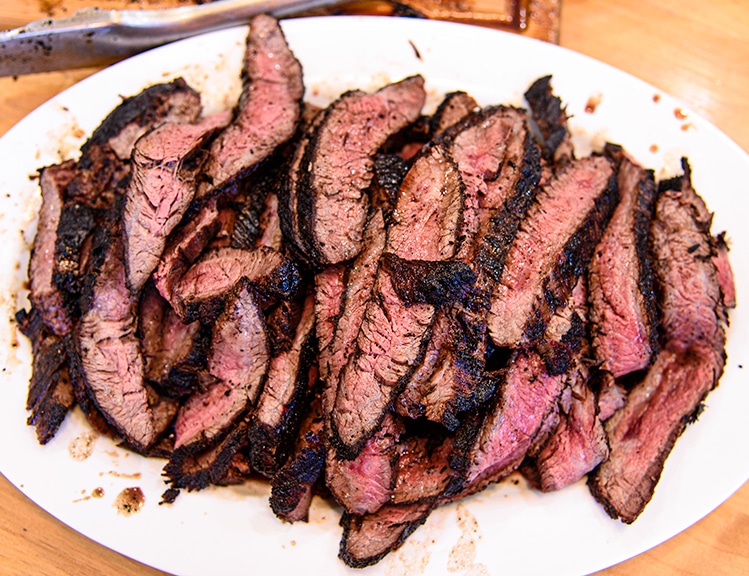
Grilled Flank Steak Recipe
Rate this RecipeIngredients

Method
- Prep. An hour or two before cooking, moisten the surface of the meat, salt it, and place it in the fridge. This technique is called a dry brine and it does a great job of amplifying flavor because the salt is sucked down deep into the meat. It also helps protein retain moisture.
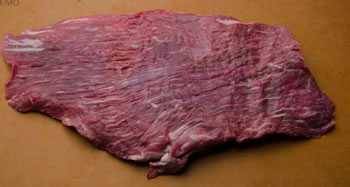
- Flank steak is usually wedge shaped. One end is a lot thicker than the other. When you cook it hot and fast one side is either overcooked or undercooked. So here's how to outsmart the steak. If your steak is more than 1/4" (6.3 mm) thicker at one end than the other, cut it in half and start the thick half first. This is important: Make a mental note of which way the grain of the fibers is running. You can even put a toothpick in there as a pointer.
- Lightly coat the meat with oil to help darken the surface and keep it from sticking.
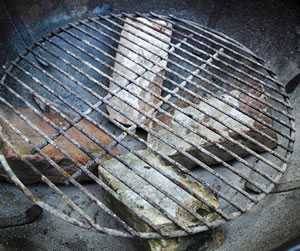
- Fire up. Start a 2-zone fire and get the hot zone as hot as possible. Flank steak is best over charcoal or the sear burner of a gas grill. If you are using charcoal, here's a trick: Raise the coals so they are about 2" (51 mm) below the cooking grate. On a Weber Kettle, put a couple of bricks under the charcoal grate as shown here. We want high heat so we can take the surface to dark brown and crusty, almost but not quite charred.
- Cook. Put the thick half of the flank steak on first, about 2 minutes ahead of the thin half. Leave the lid off. Cook about 4 minutes on the first side or until it gets dark brown and from the side you can see the color has changed about 1/4" (6.3 mm) up the side. Cook on the other side about 3 minutes. The exact time will depend on your grill. If the skinny section finishes too fast you can move it to the indirect zone.I like mine rare to medium rare, at about 125°F (52°C), which is where it is when the juices start to come through the surface. Use an instant read meat thermometer to be sure you get it right.
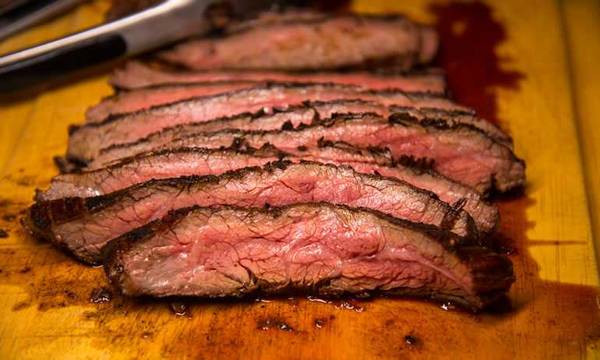
- Slice. Remove the flank steak from the grill and set on a cutting board. The way you carve the meat is crucial to making it easy to chew. Flank steak tends to be tough, but if you cut it thin and across the grain, it is easier to chew. Click here to learn more about the proper way to carve flank steak. Place the meat on a cutting board. Hold a thin blade at a 45 degree angle and cut 1/8" (3.2 mm) slices across the grain.If you slice with the grain it will be much too chewy. On a flank steak, the first cut will be a little overcooked. Not to worry, the center cuts will be just fine.
- Serve. Plate the meat, laying it out in a fan. If wanted, top it with a little chimichurri sauce but be careful not to add too much as you want to meat taste to shine through. It can also be served over salad.
- WAIT!!! OK, now that we said this recipe is the only one you'll ever need, well, there is another very kewl option. Watch this