

Bacon is among the world’s most beloved foods. Its incredible flavor can convert vegetarians into meat eaters. Cultures around the globe have developed all kinds of bacon from British rashers to Italian guanciale to Spanish tocino. In fact, at one time, the word “bacon” meant pork of any type, which could be why various types of bacon come from several parts of the pig, including the belly, jowl, back, and shoulder.
Although all bacon is cured with salts, flavoring it with smoke is a matter of cultural preference. North American and northern European bacons tend to be smoked, while Italian, Spanish, and southern French bacons are more often simply cured and flavored with herbs and spices. Either way, the salty, meaty flavor of bacon fat enhances all kinds of dishes. Bacon has long been used to add succulence to lean roasted game meats, either by wrapping small birds in bacon (barding) or inserting lardons of bacon deep into the flesh of a haunch to be roasted (larding). Wrapping grilled fish and shellfish in bacon also adds moisture and richness to the lean flesh of seafood.
Some bacons are dry cured and some are wet cured. Dry curing draws about 40% of the moisture out of fresh bacon, concentrating its flavor, setting its color, and softening the fat. Although a few types of artisanal bacon are dry cured for several weeks, all industrially produced bacon is wet cured quickly in brine. The brine is injected into the bacon with a set of fine needles, and the brine increases the weight of the bacon by about 10%. That’s why commercial bacon labels say “water added.” After a few hours of brining, commercial bacon is smoked and packed. Although brine cured bacon has a salty, smoky flavor, it is not nearly as deep and concentrated as the flavor of bacon that is dry cured.
The bright pink color of bacon develops during curing because nitrites in the curing mixture forms nitric oxide that converts the hemoglobin pigment in the meat to pink nitrosomyoglobin. Nitrite also flavors the bacon, protects the fat from rancidity, and inhibits the growth of botulinim bacteria. It also has been linked to possible cancer-causing nitrosamines that develop when nitrites combine with proteins during digestion or when bacon is fried at high temperatures. For that reason, U.S food regulations limit the amount of nitrites in bacon to 0.02%. The addition of ascorbic acid or sodium erythorbaye reduces nitrosamine formation. Nitrite-free bacon has become increasingly available. It tastes a bit different from traditional bacon and its lean meat parts tend to look brown rather thank pink.
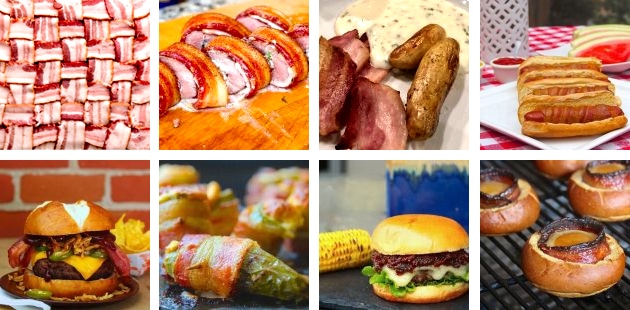
If you really love bacon, make it at home. It is so easy and costs much less than buying commercial bacon. Here are our favorite recipes for making bacon and for enjoying it in all kinds of different dishes from bacon cheeseburgers to bacon wrapped shrimp.