
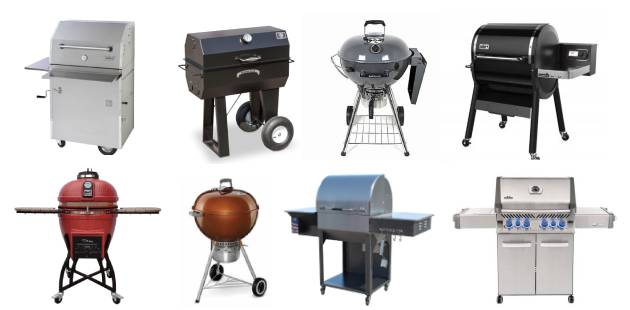
Our searchable database has over 600 cookers reviewed and rated by the world’s leading authority on the subject, the world’s only full time grill and smoker tester, Max Good. Many reviews also have useful comments from owners.
Pick a fuel
There are six heat sources for cooking outdoors: gas, charcoal, hardwood pellets, hardwood logs, and electric. Below we’ll discuss their strengths and weaknesses, but first, click here to answer the most frequently asked question: Which is Better, Gas or Charcoal? Let’s settle this once and for all.
Gas
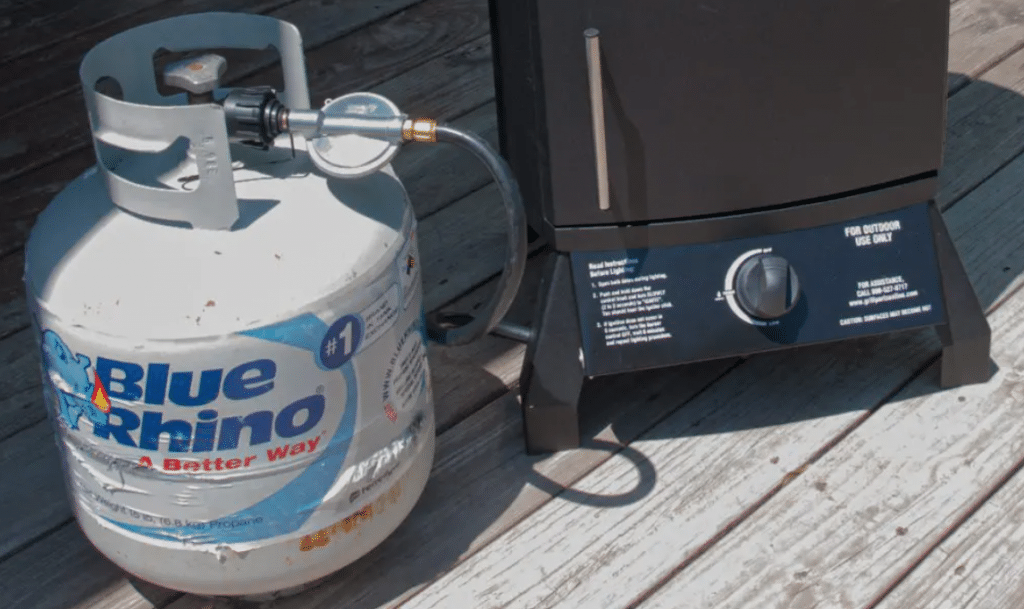
Gas comes in two forms, bottles of liquid propane (“LP”), and piped in natural gas (“NG”). The flavor is identical. These grills and smokers are extremely easy to use and produce good flavor when combined with hardwood chips, chunks, or pellets. Grills fueled by LP or NG are the most popular because they fire right up and require little cleanup. For more about how gas grills work, their strengths and weaknesses, read my article on gas grill setup. Click here for our overview of gas grills, and here for our take on gas smokers.
Charcoal briquets and lump
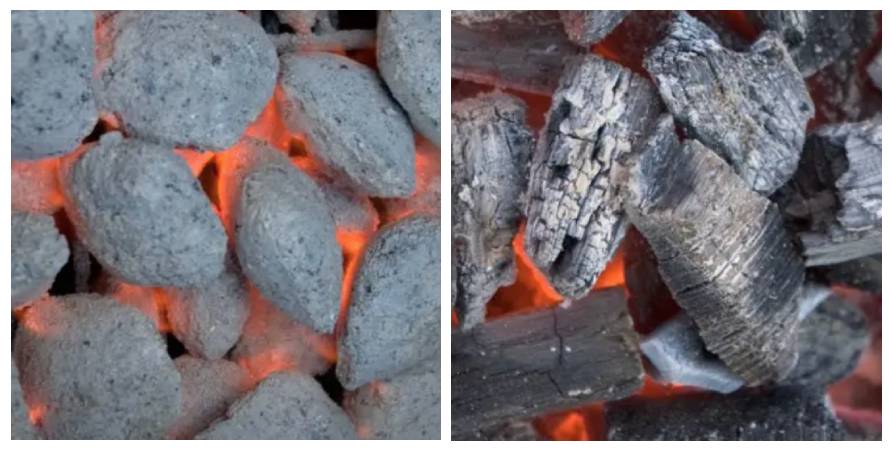
Charcoal is made by an ancient process of partially burning hardwood until it carbonizes forming char, which is a highly efficient fuel source. When fully lit, charcoal can burn practically smokeless, and it is capable of very high searing temps. It is especially good for steaks. It takes longer to get up to cooking temp than gas or pellets, and there is ash to be disposed of so setup and cleanup are slightly more labor intensive than other fuels.
Charcoal is especially good in combination with smoke producing hardwood chips, chunks, and pellets. There are two basic types of charcoal, lump or briquets. To learn more about the differences and the production process, read my article on the Science of Charcoal. Click here for a buyers guide to charcoal grills, and here for a buyer’s guide to charcoal smokers. Click here for an article on setting up a charcoal grill.
Hardwood pellets
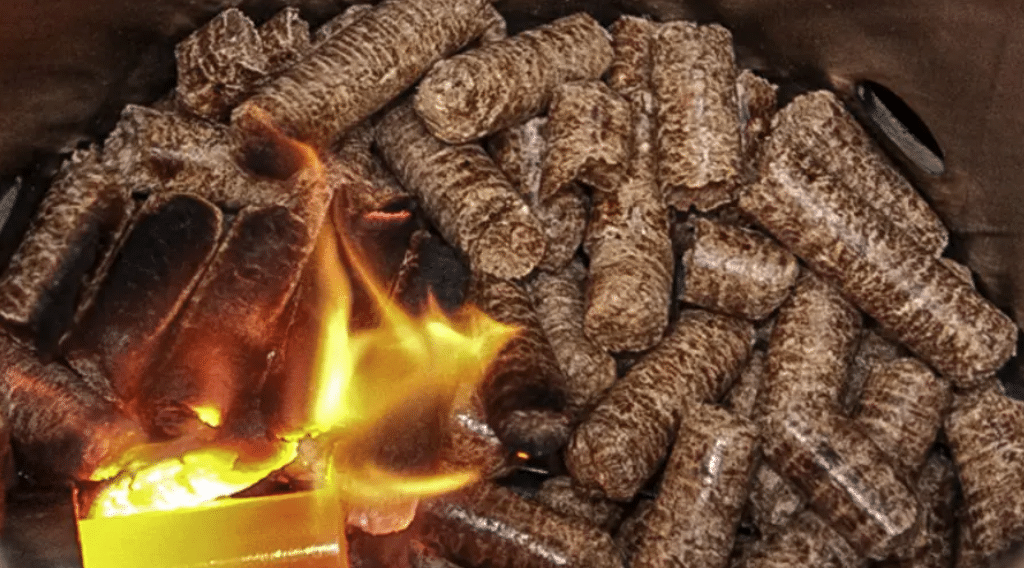
Hardwood pellets are about the easiest method going. The newfangled cookers that use them are modern marvels with digital thermostat controllers and smartphone apps. Pellets are sawdust that is compressed into little rabbit pellet sized chunks no thicker than a pencil each less than 1/2″ long. The pellets are fed into a burn pot and ignited. The number of pellets and the oxygen supply are regulated by a digital controller. Some of the better controllers are accurate to within 5°F, and that’s more accurate than most indoor ovens. They work like your indoor oven, they are best at indirect heat smoking since most do not do direct heat grilling well. You wouldn’t try to sear a steak in your oven, would you?
At this time, only one can generate enough infrared to properly sear a steak. Click here to read more about the thermodynamics of cooking. But when it comes to smoking, they are superlative. And the food tastes beautiful, although some owners complain that it is not as smoky as they like it. Click here for more about pellet grills and smokers as well as a buyer’s guide.
Hardwood logs
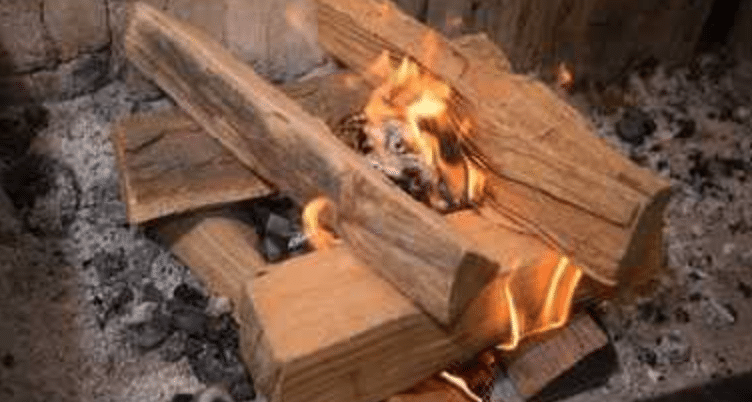
Cooking with logs is tricky and requires the right kind of cooker, the right kind of wood, and practice. Controlling temperature is tricky. Most “stick burners” start the wood burning outside the cooker, let it burn down to glowing embers, and then they cook with the embers. Above is a classic “burn box” made from a 55 gallon drum for preparing embers. You never want to burn softwood or resinous wood like pine because the sap burns very hot and the flavors are not very tasty. If you are thinking of going this route, read these: How to Grill With Wood and Master Campfire Cooking and What You Need to Know About Wood, Smoke, And Combustion.
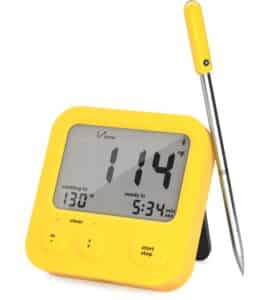
The Combustion Predictive thermometer is one of our favorite wireless probes, using a unique sensor array to measure and predict cooking times. Check out our full review.
Electricity
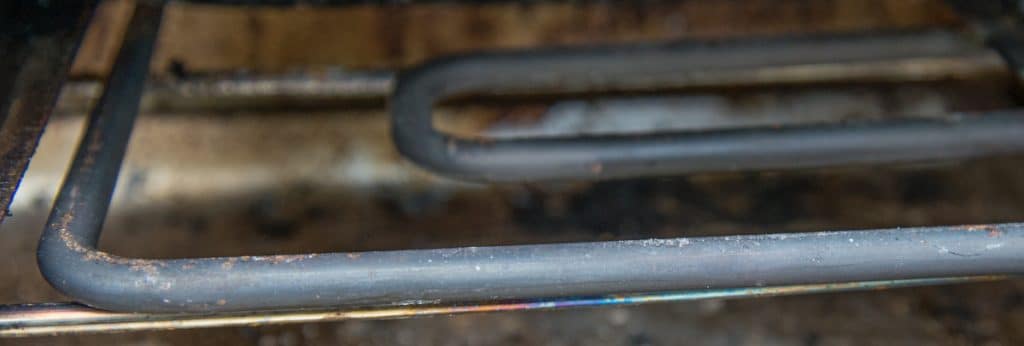
Electric grills and smokers use a heating element that glows as electricity passes through it, sort of like a giant light bulb. The glowing element generates heat that cooks the meat. Because there is no burning, there is no cellulose, lignin, char, or even oxygen combusted, there are no combustion gases. There is no smoke, and so there is no smoke flavor. The great advantage is that electric heat is very easy to control, and because there is no fire, it is allowed on most apartment balconies that forbid other grills. Here’s What To Look For When Buying Electric Grills.
You can use sawdust and wood chips with some electric grills, and get a nice smoke flavor, but it is different from other smoke flavors because the wood smolders at a low temp. Electric smokers can make smoke from wood, but the burn temp is so low that the flavor is very different than gas or charcoal smokers, and in my mind, inferior for most foods. Nor do electric grills get hot enough to properly sear a steak without overcooking the interior, and most cannot be configured in a 2-zone setup. I recommend electric grills and smokers only for people in buildings where gas and charcoal are not allowed.
How to shop
Here is a video on how to buy a gas grill.
Here is a video on how to buy a charcoal grill
Here is a video on how to buy a smoker.
Here are links to other articles that will help you select the perfect smoker or grill for your needs:
Grills
- Charcoal grills vs. gas grills. Let’s settle this once and for all.
- How to buy a grill. A checklist of things to look for before you buy. Take it shopping.
- Charcoal and wood burning grills. Still the best way to sear a steak. There are some designs that work better than others. Here’s what you want.
- Gas grills. Nothing beats gas for convenience and versatility. And yes, you can smoke on them. Here’s what to look for.
- Electric grills. Really just glorified electric frying pans, better than nothing if you have a small condo balcony and they won’t let you have a charcoal or gas grill.
Smokers
- How to buy a smoker. A checklist of things to look for before you buy. Take it shopping.
- Egg, ceramic, and other kamado-style grill/smokers. Heavily insulated, these are very efficient smokers, exscellent at pizzas and baking, low and slow roasting, and cold weather cooking.
- Pellet grill/smokers. Thermostat control that is truly set it and forget it, and you’re cooking with wood. Amazing tools, but not good for searing.
- Gas Smokers: Buying Guide, Reviews, Ratings, and Recommendations. No messy charcoal, steady temps, very good flavor, and cheap.
- Electric smokers. Set it and forget it. But the flavor is lacking.
- Stovetop smokers. Smoke indoors (if you have a good vent fan) or on camping trips.
More
- Small portable grills. For the balcony, beach, boat, and tailgating.
- Large capacity, trailers, and commercial smokers. Ready to start catering, open a restaurant, cooking in competitions, or county fairs?
- Pizza ovens. For the best pizzas, rustic breads, and more.
- Stainless steel. Is stainless a good choice?
- Designing an outdoor kitchen. How to plan an outdoor living space, and hidden gotchas.
- Parts to repair, modify, and upgrade your cooker. Revive the old warhorse.
- Grills gone wild. Need a laugh?