

Fat Tuesday. Is there a more joyous food holiday? This special occasion revels in the richest, fattiest, most calorie-laden and decadent edibles available. After all, it’s the last day before the fasting of Lent, which begins on Ash Wednesday. Mardi Gras is actually the culmination of the entire Carnival season, a months-long celebration featuring public parades, parties, costumes, masks, high-spirited revelry, and magnificent feasting.
From Belgium to Brazil, Mardi Gras festivities take place all over the world. In America, the party reaches its peak in New Orleans, Louisiana, the birthplace of U.S. Mardi Gras celebrations. Way back in the late 1600s, French King Louis XIV sent delegates overseas to defend France’s claim on the American territory of Louisiane. At that time, Louisiane included the modern-day states of Mississippi, Louisiana, Alabama, and portions of eastern Texas. On Tuesday March 3, 1699, the king’s delegates made camp on the Mississippi River about 60 miles downstream from what is now New Orleans. It happened to be Fat Tuesday, and in honor of that day, they named the encampment area Mardi Gras Point (Point du Mardi Gras in French). By 1723, New Orleans became the capital of Louisiana, and the first NOLA Mardi Gras parade took place in 1837.
New Orleans was a natural epicenter for Carnival celebrations in the region and eventually the entire United States, a badge of honor that New Orleans has welcomed with open arms. For two weeks leading up to Fat Tuesday, local NOLA social clubs or “krewes” pull out all the stops with elaborate parties, balls, costumes, masks, dances, marching bands, parades, and floats, where riders toss “throws” such as colorful beads, doubloons, moon pies, lingerie, and coconuts into the cheering crowds. Anything goes during Mardi Gras, and it’s a wild time. Or as they say in the Big Easy, laissez les bons temps rouler. Let the good times roll!
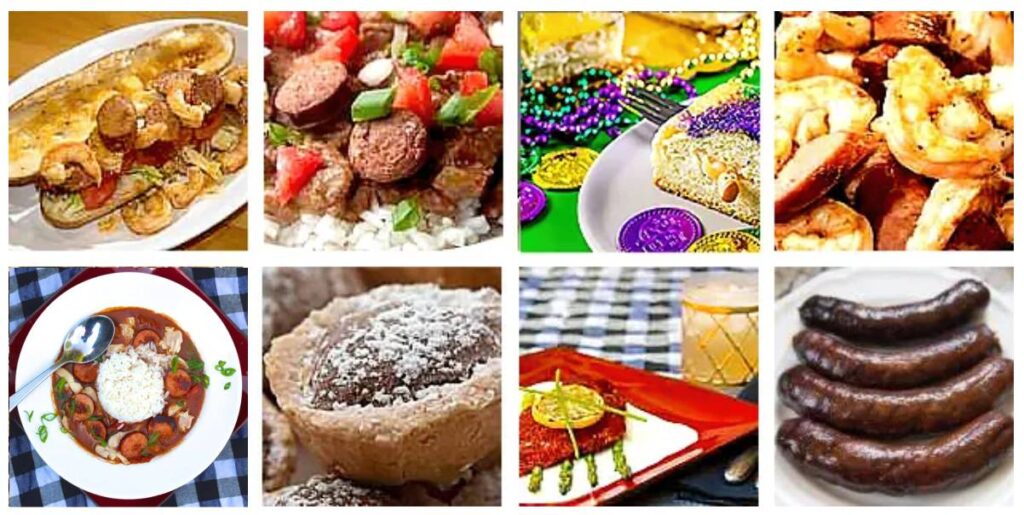
King cake is the most iconic Mardi Gras food, decorated in the traditional colors of purple (for justice), green (for faith), and gold (for power). This rich, buttery cake is twisted and baked in a ring-shaped mold then decorated with colored icing sugar. It’s customary to hide a baby Jesus figurine inside the cake. Whoever gets the trinket bakes the next king cake to keep the party going.
Sweet pancakes are also traditional on Shrove Tuesday, as Mardi Gras is sometimes called, along with all manner of rich, fried pastries from doughnuts to beignets. In New Orleans, other Cajun and Creole foods find their way to Mardi Gras tables from jambalaya and gumbo to muffuletta, andouille po’ boys, grilled oysters, red beans and rice, pralines, hurricanes, and Sazerac cocktails. If you can’t make it down to New Orleans to partake of these foods and drinks, enjoy them at home! Here are some of our richest, most delicious NOLA-inspired recipes to help you celebrate Mardi Gras in style, no matter where you are.