
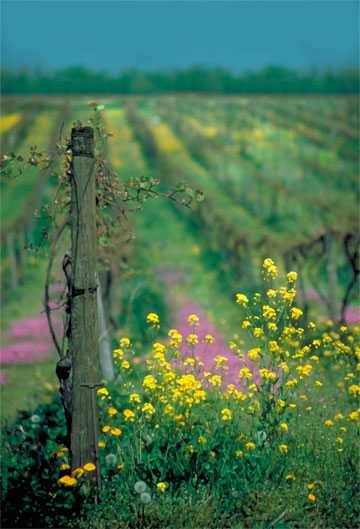
Mustard begins as the seeds of mustard plants, Brassica, members of the cabbage family. Their little yellow flowers produce white, brown, and black seeds, which are ground to make mustard “flour.” White mustard seeds, which are sometimes called yellow, produce yellow powders, and black seeds produce a brown powder. Black seeds are hotter.
Once you have the seeds, you can take a number of paths. You can grind them into a powder and separate the husks, or just crack them and leave in the husks. They you can mix them with water, vinegar, white wine, beer, liquors and liquers, lemon juice, or lime juice, and add salt and other spices. The results range from bright yellow to brown, from smooth to grainy, from incredibly pungent, to mild.
They go from the three-alarm variety served in Chinese restaurants made by simply adding vinegar or water to the powder, to the pungent brown French Dijon style made with white wine, to the mild bright yellow American version served on hot dogs in the US.
Mustard’s heat comes from oils released when the ground seed is mixed with liquid. The active ingredient is allyl isothiocyanate. It travels up the nose, and the really hot ones can make your eyes tear. Unlike chile pepper heat, which tends to stay in the mouth and builds cumulatively with each mouthful, mustard heat dissipates fairly quickly. Some of the heat is due to the variety of the seed, some to the solvent added, and some to the temperature of the solvent. Cooking the brew actually can defang it a bit. It can be diluted with water and thickened with flour. Mustard heat and flavor dissipate with age, so buy small quantities, and use them up.
According to the jocular Barry Levenson, Curator, with his wife Patti, of the Mustard Museum, mustard is the oldest condiment. The Chinese have grown mustard for more than 3,000 years and mustard seeds were found in the tombs of Egyptian Pharaohs. He says “The earliest references to mustard in the Dijon region of France dates back to 1336, but we can assume that the early monks had developed the art of mustard making many years earlier.”
If you love the stuff as much as I do, then you absolutely must visit the National Mustard Museum in Middleton, WI, about three miles west of Madison. Try to be there on “The Big Yellow”, National Mustard Day, in early August. It features $1 hot dogs with mustard. If you want ketchup, there is a $10 surcharge. They sponsor an annual judging of 16 categories of mustards including salad dressings, sauces, and more. I have had the privilege of judging the event. The winners are sold in their gift shop along with many others, and you can sample them. The website are a treasure trove of info and trivia, and it sells a number of mustards and other sauces online. In the shadow of the massive University of Wisconsin campus, Levinson touts his facility as Poupon U.
Mustard has a number of culinary applications in addition to use as a condiment on sandwiches, most importantly as an emulsifier to help oil and vinegar mix together properly in salad dressings. Yellow mustard is at the heart of South Carolina barbecue sauce, one of my favorites, especially for pulled pork. And without mustard, pretzels are boring.
Mustard is to pulled pork as jelly is to peanut butter. The two just go together naturally. Although most BBQ sauces are tomato based, classic South Carolina BBQ sauces are yellow and are based on yellow mustard. Many Kansas City-style red BBQ sauces have mustard added for complexity, spiciness, and depth of flavor.
Mustard styles
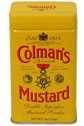
English dry mustard a.k.a. Mustard powder. Colman’s Mustard powder is a blend of brown and white mustard powders that has been made in England since 1814 and is widely available. You can prepare your own condiment by mixing it with wine, vinegar, water, and seasonings. Go ahead. Make your own honey mustard. Go easy. It’s hot. Real hot.

Dijon-style mustard or brown mustard. I use the more widely available Grey Poupon. Technically GP is “Dijon-style,” since it is now made in the US and other locations by Nabisco. Dijon and Dijon-style mustards are made from brown or black mustard seeds. The seeds are ground, and white wine, verjus (the juice of unripe grapes), or vinegar is added along with other spices and herbs. For most of my recipes I use the original Grey Poupon, not the “Country” or “Spicy” flavors. GP is owned by Kraft.
Whole grain mustard. Contains the husks of the seed giving it a rustic texture and flecks of brown color. I like it for pan sauces.

Yellow “ballpark” mustard. Made from yellow mustard seeds and colored by turmeric, American “ballpark” style mustard is essential for eating hot dogs, emulsifying salad dressings and pan sauces, in South Carolina BBQ sauces and many other sauce recipes. They are not as hot and flavorful as English or Dijon mustards. French’s is the most popular and they claim it takes 10 million seeds to make one bottle. French’s is owned by the multinational, Reckitt Benckiser. I have also used Plochman’s and there is little diff in taste. Plochman’s is still family owned. Usually I buy whichever is on sale.
Other mustards. Other popular mustard types are honey mustard (mixed with honey), horseradish mustard (mixed with horseradish), and hot mustard (mixed with wasabi or hot chile peppers).